This Isn’t a Conspiracy. It’s What Losing Looks Like: A TruthWire News Op-Ed

Not a conspiracy, just momentum they can’t accept, grassroots energy is building, and the establishment clearly resents it.
Share
This Isn’t a Conspiracy. It’s What Losing Looks Like: A TruthWire News Op-Ed

Williamson Wrong is trying to present this as something intricate. It isn’t. It only works if you accept a series of assumptions they never actually prove, and if you ignore what’s been happening in Williamson County for the last five years.

Start with their foundation. Sheriff Jeff Hughes introduced Mary Smith to Shawn Ryan. Ryan says he respects Hughes. From there, they build outward, Hughes, Ryan, Barnes, prior relationships, and present it as evidence of coordination. That’s a thin premise. Introductions are how interviews happen. That’s true everywhere. If that alone is enough to imply influence, then nearly every public appearance by every candidate would fall under the same suspicion. But that standard is applied selectively, which tells you this isn’t about principle, it’s about outcome.

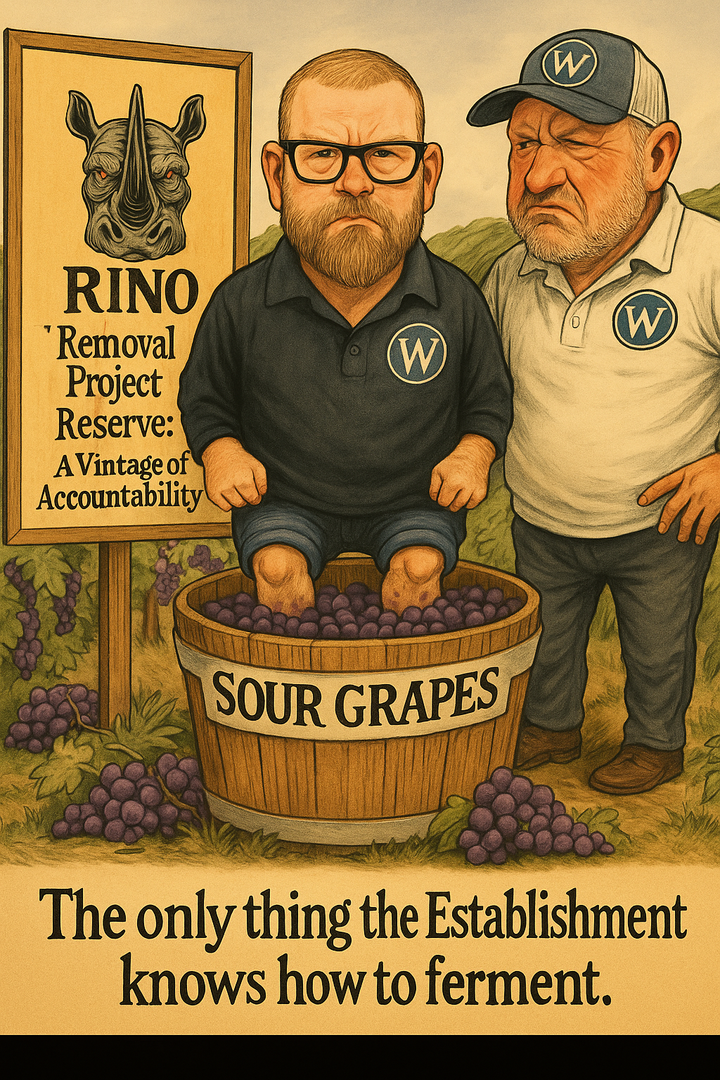
Photo Credit: Williamson Wrong FB page

The next step in their argument is to critique the interview itself. Ryan didn’t push hard enough. He didn’t follow up the way they would have. He allowed answers to stand. That’s not evidence of coordination. It’s a complaint about format, and more to the point, it’s a category error. Shawn Ryan has never claimed to be a journalist. He’s a podcaster. His format is long-form conversation, not adversarial reporting. Holding him to a standard he has never claimed, and then using that gap as evidence of something improper, isn’t analysis. It’s mislabeling the medium so the criticism sounds more serious than it is. You can prefer harder questioning, but that’s a preference, not proof.

Even then, the substance doesn’t support their claim. He questions the debt, presses on taxes, raises development concerns, and brings up the strain on infrastructure and workforce. He even floats the idea of corruption directly. That’s not a curated platform, it’s a conversation covering the same issues voters are already talking about. So the argument shifts from substance to tone, because tone is easier to criticize than content.

From there, they try to build a pattern. Hughes introduces Ryan. Ryan interviews Smith. Barnes endorses Smith. People know each other. Therefore, coordination. But listing connections isn’t the same as proving intent. In a county this size, with a relatively small political ecosystem, overlap is inevitable. People know each other. They’ve worked together, against each other, or around each other. If proximity is the standard, then everything looks coordinated. What’s missing is anything that shows these relationships produced a coordinated outcome. There’s no directive, no exchange, no mechanism, just association. So proximity gets repackaged as intent, and that’s where the argument starts to thin out.

Because underneath all of this is something they’re not quite addressing directly. This isn’t really about the interview. It’s about what the establishment has misread for the better part of five years. There has been a consistent assumption that the grassroots was temporary, that it would fade, that once the right candidates were put forward and the usual endorsements lined up, things would settle back into a familiar pattern. That hasn’t happened. Instead, the grassroots has become more consistent, more engaged, and less dependent on institutional signals. Voters who used to follow cues are now making independent decisions, often based on issues the establishment has either minimized or mishandled.

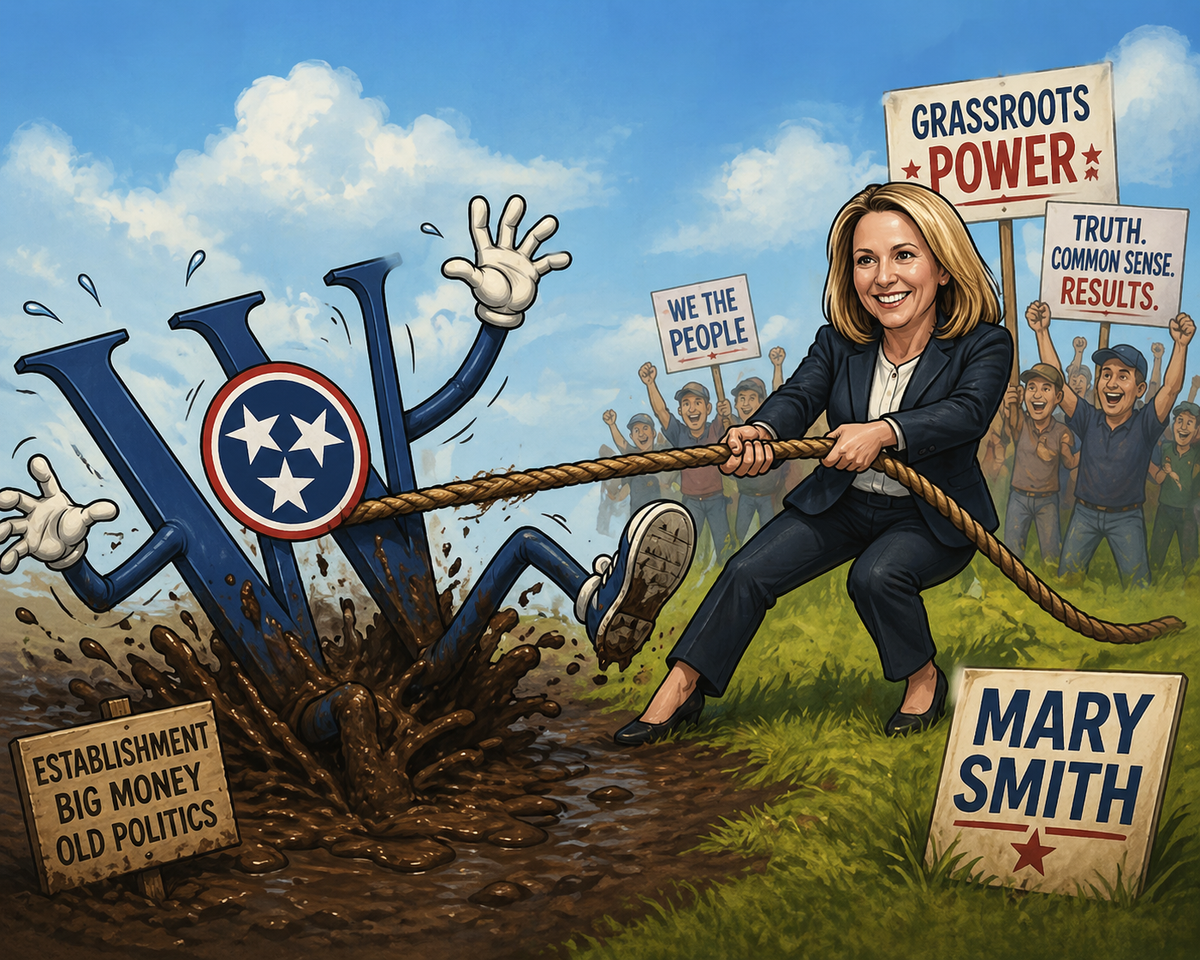
Photo Credit: Williamson Wrong FB page

The 2024 sheriff’s race made that clear. Jeff Hughes had three months to run. The expectation was that the vote would split and the establishment candidate would carry the day. Instead, Hughes, backed by grassroots support, edged it out. That wasn’t supposed to happen, and that outcome hasn’t been fully accepted. So now it’s being reinterpreted. If the grassroots had that kind of impact, it can’t be organic. It must be coordinated. If the expected structure didn’t produce the expected result, then there must be another structure underneath it.

That’s where the argument starts to drift into something more familiar, projection. The establishment spends a considerable amount of time engineering outcomes, coordinating endorsements, aligning donors, shaping narratives, and managing the flow of information. That’s how they win, or at least how they expect to. It’s a system built on access, money, and influence, and it’s one they understand very well because they’ve relied on it for years.

So when something falls outside of that system, the instinct isn’t to reconsider the system. It’s to assume someone else must be using one just like it.

Hughes becomes useful in that reframing, not because the evidence points there, but because redefining him as part of some broader “influence network” strips the grassroots of agency. It turns a voter-driven result into something managed and replaces a shift in behavior with an implied system. Barnes gets pulled into that framing as well, despite the fact that he has relationships across the same establishment circles and made an endorsement that didn’t exactly help him there. That detail doesn’t fit neatly, so it gets absorbed without much explanation. The theory needs continuity more than it needs consistency.

And then there’s the most basic problem with all of it, power. They’re asking you to believe that the candidate without PAC backing, without institutional endorsements, and without the traditional support structure is the one orchestrating influence, while the candidate backed by the governor, the sitting county mayor, and multiple municipal leaders is simply the natural outcome. That’s backwards. If coordination is the concern, the logical place to look is where power is already concentrated, not where it clearly isn’t.

Which makes the final piece harder for them to ignore. They have the money. They have the endorsements. They have the infrastructure. And yet, they’re still spending time constructing explanations for why a grassroots candidate getting a podcast interview must mean something larger is at play.

That’s not confidence. That’s discomfort.

If the grassroots were as insignificant as they’ve been described for years, none of this would be necessary. You don’t build layered theories around something that doesn’t matter, and you don’t try to recast past outcomes or explain away current exposure unless it does. For five years, the expectation was that the grassroots would fade. It hasn’t. It’s still here, still influencing outcomes, and still operating outside the structures that used to define local politics.

So now the argument has shifted. It’s no longer that the grassroots doesn’t matter. It’s that it isn’t real, that it’s actually something else, something coordinated, something engineered.

But that doesn’t match what people are seeing, and more importantly, it doesn’t match what people are doing.

The simpler explanation is still available: voters are making different choices than they used to, and no amount of re-labeling changes that.

Photo Credit: Shawn Ryan Show X account

If you want to support what we do, please consider donating a gift in order to sustain free, independent, and TRULY CONSERVATIVE media that is focused on Middle Tennessee and BEYOND!