
Two Visions, One County: What the Williamson County Mayoral Debate Really Revealed
A sharp debate revealed more than policy differences—it exposed a divide between management and accountability, rhetoric and reality, and raised serious questions about debt, growth, transparency, and who ultimately pays.
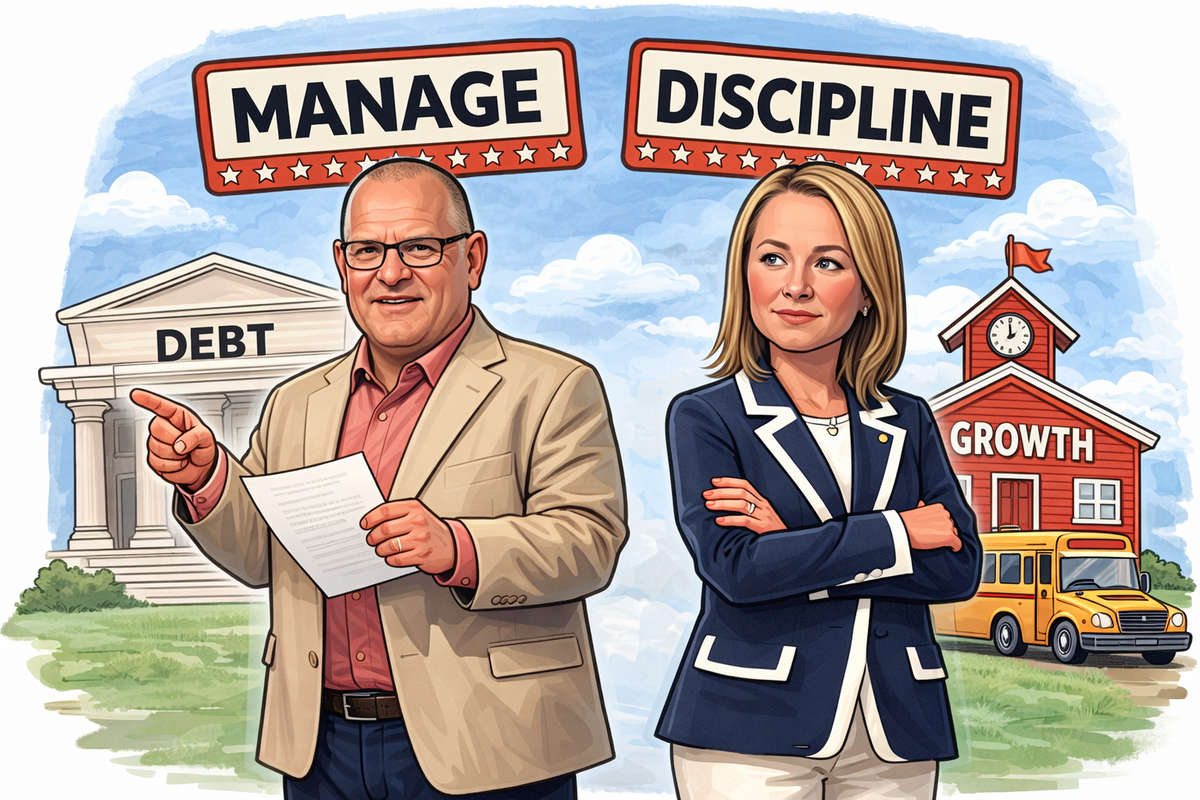
5 Key Highlights:
- The debate exposed a core divide: Marshall emphasized management and relationships, while Smith focused on discipline, oversight, and accountability.
- Debt became central, with conflicting narratives—Marshall downplayed the burden, while data shows Williamson carries high per-capita debt (~$4,431).
- Growth and infrastructure revealed a key tension: collaboration vs. structural control over decisions that create taxpayer-funded obligations.
- The failed annexation bill (HB 2419 / SB 2311) highlighted opposing views on local control, raising questions about who should bear responsibility for growth decisions.
- Endorsements vs. engagement: Marshall leaned on support from city leaders, while Smith’s backing reflects direct constituent interaction and accountability.
- READ ENTIRE ARTICLE BELOW 👇
For a debate where both candidates largely agreed on the problems facing Williamson County, what stood out most Monday night was not disagreement over symptoms. It was instinct, and, at key moments, a gap between how those problems were described and what the underlying facts actually show.
Growth is outpacing infrastructure. Traffic is eroding quality of life. Costs are rising. Debt is mounting. On the surface, Andy Marshall and Commissioner Mary Smith sounded aligned. But as the evening unfolded, it became clear they are not offering two versions of the same solution. They are offering two fundamentally different ways of thinking about government, accountability, and who ultimately bears the cost of decisions made at the top.
Marshall opened as the outsider businessman, telling voters, “I stand before you… as a man who owes everything to this community,” and emphasizing that Williamson County’s problems are “fixable.” Smith grounded her case in experience, saying she has “sat through dozens of county commission and committee meetings… dug into our budget… [and] delivered real solutions.” One framed leadership as something proven through building. The other framed it as something earned through understanding. That contrast might have remained stylistic if not for what followed when the conversation turned to debt.